
Bamako | Lomé | A research and implementation WorkTech
Only 15% of West African youth find formal jobs. Kabakoo upskills the rest.
Learning over WhatsApp. A multilingual AI Mentor in French and Bamanankan. Peer pods that meet in person. Income effects measured against control groups for 32 months. Regular A/B tests from the start to the end of each cohort. We make learning work.
According to the ILO, over 85% of the West Africans have to make a livelihood outside formal jobs.
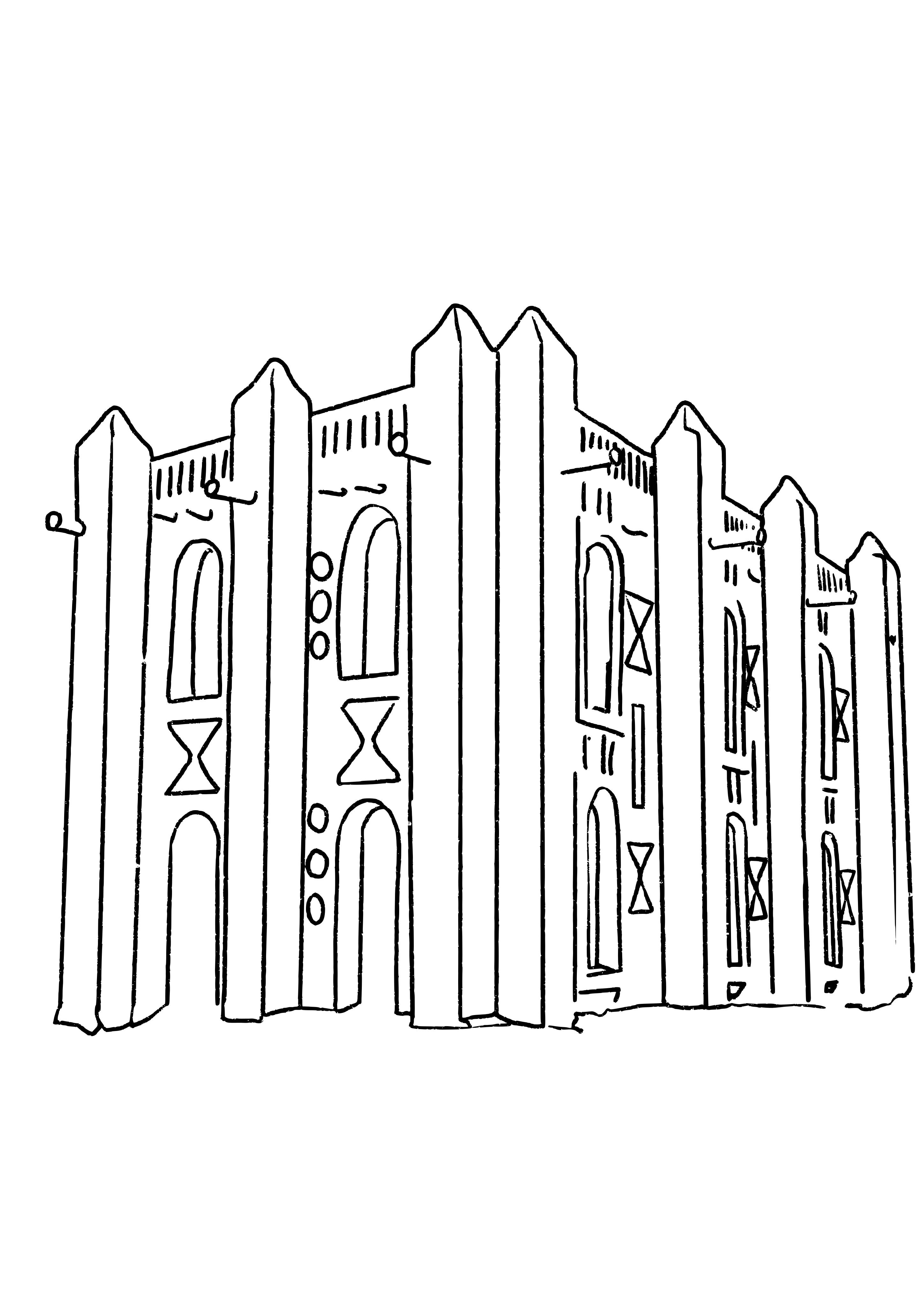
Peer-based upskilling, mobile-first, with AI and a notebook.
Trained in cohorts, event/hackathon attendances, and festival-site visits
≈5,000 directly identified effects, spillover evidence across the rest, as for August 2026
Launched with Mali's Ministry for Digital Economy, August 2026
5.1–8.4x with spillovers, 3–5x direct | 32-month panel, with an evaluation framework from University of Paderborn





The mechanism
Learning that starts where learners already are
Enter on WhatsApp.
In a December 2025 survey of Bamako youth, 99.1% used WhatsApp on their own phones and 71% named it their main source of job and program information (neighborhood survey, n=322). So that's where Kabakoo's platform lives. A learner signs up in a WhatsApp conversation and starts a 30-day challenge, one short, doable task each day.
Learn with an AI Mentor and a pod.
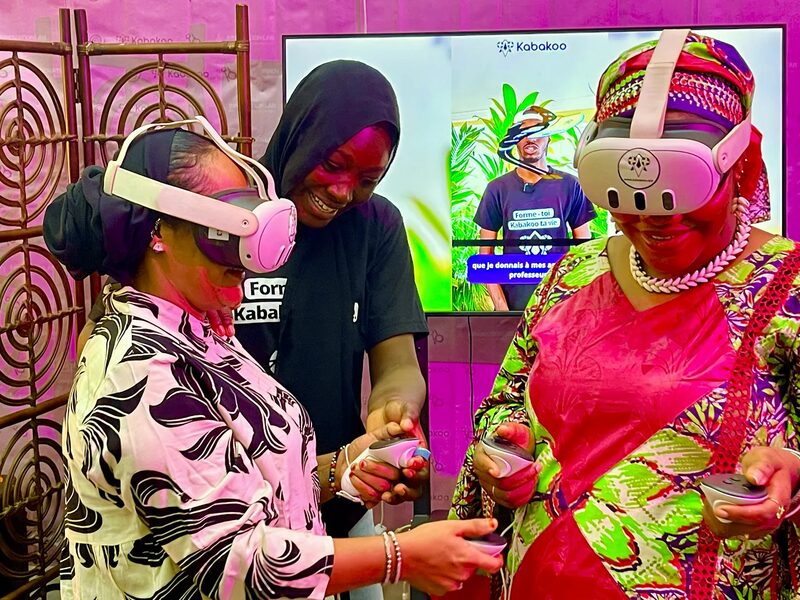
The AI Mentor is an instructional facilitator, not a chatbot. It answers learner questions around the clock, in French and Bamanankan, and gives personalized feedback on real learner work. Over six months, 6,618 learner accounts messaged it on WhatsApp against 284 in the app. Alongside it, learners join pods, small peer groups of three to five matched on interests and geography, which meet in person.
Measure what changed.
Kabakoo tracks learners for years, not weeks. A 32-month evaluation panel built with the University of Paderborn measures incomes, mindsets, business behavior, and learner satisfaction against control groups. The results, and their limits, are public.
Making AI work for the 85%!
The AI record
Building AI for West African youth since 2019
Kabakoo has operated an AI coach on WhatsApp since 2023.
- 2019Kabakoo starts building AI into its upskilling work in Bamako
- 2020Hosts a workshop at the UNESCO High-Level Futures Literacy Summit on whose values technology carries, with Dr. Abeba Birhane, who now serves on Kabakoo's board
- 2023The AI coach goes live on WhatsApp; Bamako.ai is created after the "OpenAI Mali" scam defrauded thousands, to build AI literacy in public
- 2024The Bamanankan AI Mentor launches; the World Economic Forum names Kabakoo one of 9 global case studies for AI in education; three ministers in charge of the digital economy, from Mali, Burkina Faso, and Niger, live-test the AI Mentor at SENUMA
- 2025Automated evals let a model swap match accuracy at 57% lower inference cost; presentation at World Bank headquarters, Washington DC; lighthouse at the Bank's Africa LEADS convening
- 2026Selected for the AI for Global Development Accelerator (Agency Fund and CGD); expert input to the WEF's "Shaping the Future of Learning"; Real ML Steering Committee.
"To operate both conceptually and implementation-wise at the global frontier of such a fast-moving field as AI and the future of upskilling, for more than half a decade, from our offices in Mali and Togo, is quite a headline."
Kabakoo monthly update, June 2026
French and Bamanankan | June 2026
At matched accuracy | WLS brief | July 2026
Building the raw material the field lacks; research dossier; June 2026
New | August 2026
A national program in Mali
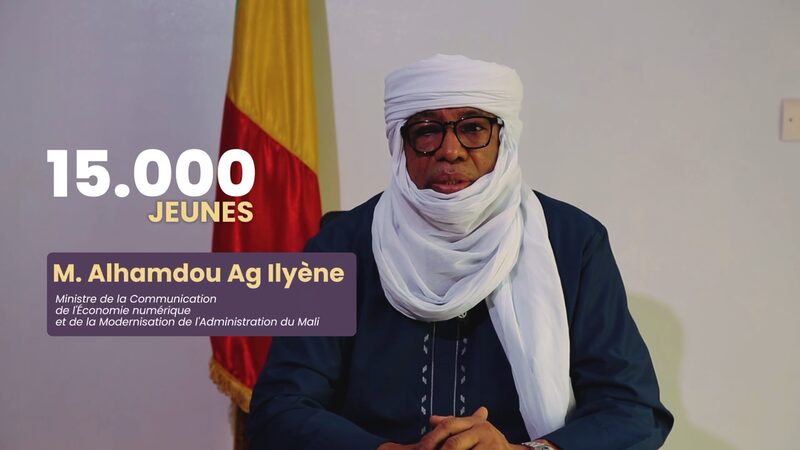
In August 2026, Kabakoo launched the first cohort of Mali's national upskilling program, launched under the authority of the Prime Minister and the Ministry of Digital Economy. It builds on the three-year convention signed in January 2026: a shared ambition to upskill 15,000 young people across Mali by the end of 2027.
The state is committing resources only a government can bring: public training facilities across the country, trainers from state agencies, introductions across ministries, land for a future eco-campus, and airtime on ORTM, the national TV and radio network. That last one is essential. When Kabakoo coded 5,122 open-ended answers on why young Malians trust whom they trust, ORTM derived nearly half of its trust (48.4%) from authority and legitimacy alone. A Minister announcing enrollment on ORTM speaks in exactly the currency that matters.
Our reach and impact
The circles around Kabakoo keep widening
140,000 meaningfully engaged. 43,373 lives improved, directly or through spillovers. Kabakoo counts person by person, every figure below comes from a published source, and the strictest circle, the 32-month panel, sits at the center.
- 140,000+ meaningfully engaged
Platform users, workshop attendance, and in-person attendance across three Bamako.ai editions, 2019–2026.
- 43,373 lives improved, directly or through spillovers
≈5,000 with directly identified effects (brief, July 2026). And membership itself is associated with higher incomes: actively exposed people showed +47,800 FCFA (~$78) more monthly income than strict unexposed controls (observed, May 2026).
- ~5,000 directly upskilled in structured cohorts
Impact evidence brief, July 2026.
- The 32-month panel
Evidence against control groups. The evidence page holds them.
Highdigenous
Fusing high-tech to indigenous knowledge
Highdigenous is Kabakoo's word for fusing frontier technology with indigenous knowledge systems, the materials, processes, ecological wisdom, and social structures that already organize life in West Africa. The Kabakoo AI Mentor speaks Bamanankan because learners do; peer learning is built on the grin, the tea circle where young Malians already gather. Our Labs are built around existing economic value chains and knowledge systems.
Kabakoo treats master artisans as knowledge holders. When their stories were told that way, Hamadoun Témé passed 133,000 unique viewers on a single video, Noumousso Kané reached more than 100,000, and Samaou Touré reached 766,000 impressions with a single written post. All organic.
"I used to be ashamed of wearing our local attires, but my perception changed with Kabakoo. Today, I wear them with pride."
Amadou T., learner from Birga-Dogon, now Highdigenous Project Manager at Kabakoo
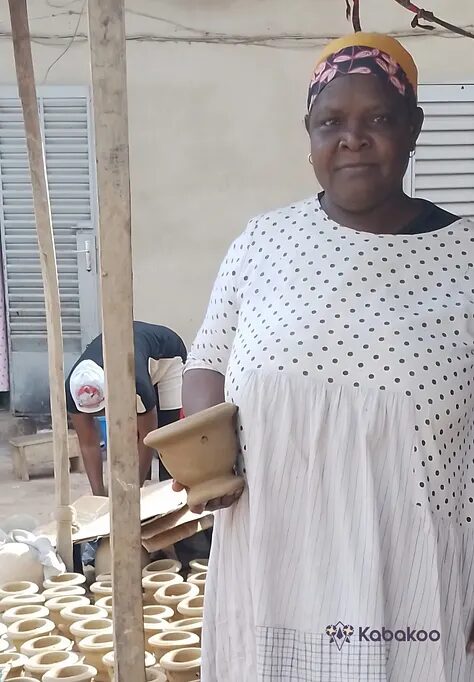
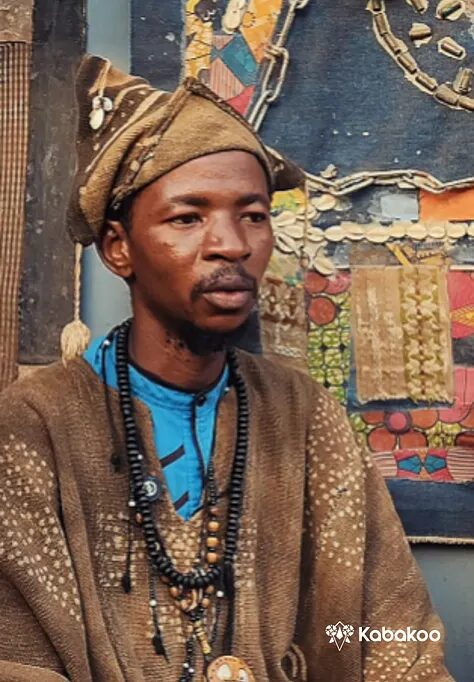
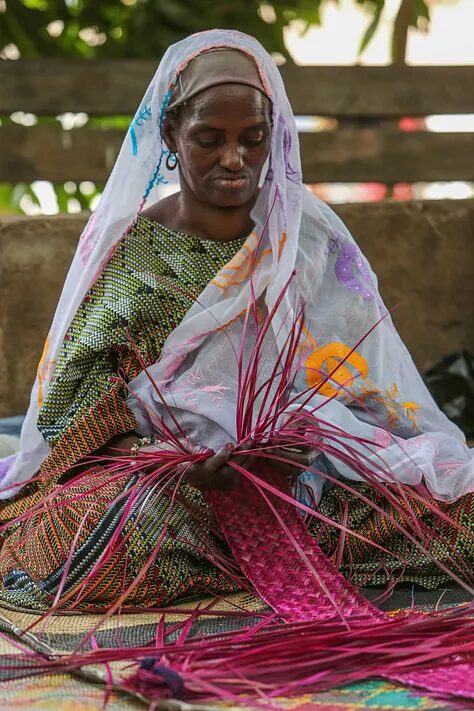
Kabakoo runs labs where master artisans and learners turn endogenous knowledge into curriculum, and into economic value.
Urban Agriculture Lab
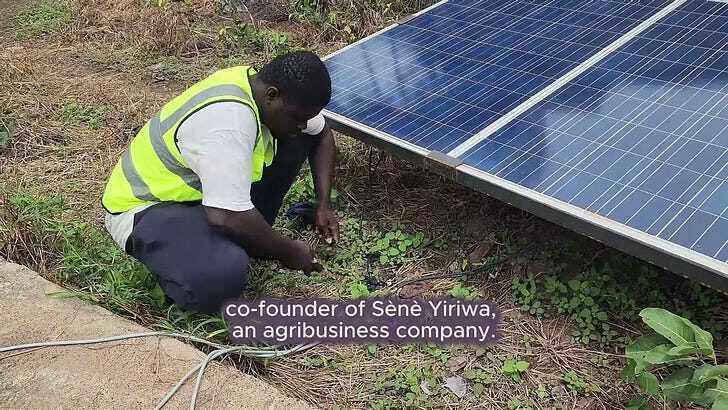
An Agri AI Mentor in local languages, digitized national tracks in market gardening and poultry, and alumni ventures like Sènè Yiriwa.
Regenerative Architecture & Design Lab
Le Nid de Bamako, 2,000 handwoven fans into a 130 m² pavilion; TabliCool; the AR Great Mosque of Djenné.
Textile & Fashion Lab
An immersion with one of Mali's last natural-dye masters, and a fashion track where learners launch brands.
One learner, in numbers
Boubou D., from street vending to a registered business
Boubou D. was a street vendor in Bamako earning about 360,000 FCFA a year, roughly $622. After his Kabakoo cohort he built on his farming knowledge and founded Sènè Yiriwa, an irrigation-systems company for farmers, now registered. Three years after joining Kabakoo, he was doing about 12 million FCFA a year, around $20,000.
The aggregate effects are made of thousands of stories like this one. Go to our evidence page for details.
Making Learning Work!
In Kabakoo's first WhatsApp-only cohort, half of the 826 enrolled learners never took a single action. We publish that number, what we learned from calling hundreds of them, and what we changed. Because we take evidence serious. Really.
Recognition
Don't take our word for it.
Every logo below links to its source; follow the links if you want to learn more.
Selected and recognized by

Working with



Also on the record
- Government of Mali
Three-year convention with the Ministry of Digital Economy (January 2026); national program launched under the Prime Minister's authority (August 2026).
- Université de Lomé
Signed MoU (January 2026) recognizing Kabakoo as a global reference in learning innovation; planned pilot with 1,000 final-year students.
- Ernst & Young
Named "Benchmark Inspirant" in EY's economic-modeling study for UniPod Togo, a benchmark of 9 organizations worldwide, done without Kabakoo's prior knowledge.
- Apolitical Edge 50
Selected for Apolitical's Edge 50 list (2026).
- Real ML
Our Co-founder, Dr Yanick Kemayou, is member of the Steering Committee.
- Niantic Real-World Gaming Challenge
Winner, for the AR Great Mosque of Djenné.
What brings you here?
Fund this
Evidence you can trust or challenge.
Partner as a government
Ou signed convention and the national program with Mali's digital-economy ministry as the working model.
Collaborate on research
An anonymized panel on mindset-oriented and AI-powered upskilling in West Africa? Naturalistic AI data on agency? Or just a replication package?
Press
The full press kit.